Fendi Sukuraga
Creator of Wayang Sukuraga & Sukuraga Education Method (SEM)
EXECUTIVE SUMMARY
WHAT IS SUKURAGA EDUCATION METHOD (SEM)?
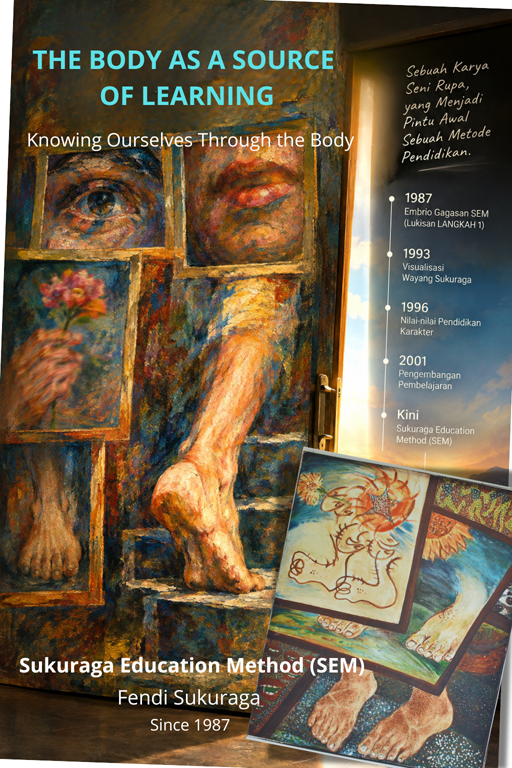
Sukuraga is a character education approach that uses the human body and its parts—such as the eyes, ears, mouth, hands, and feet—as learning media and metaphors for self-awareness. Through an understanding of their own bodies, children are encouraged to develop self-awareness, creativity, empathy, responsibility, and character.
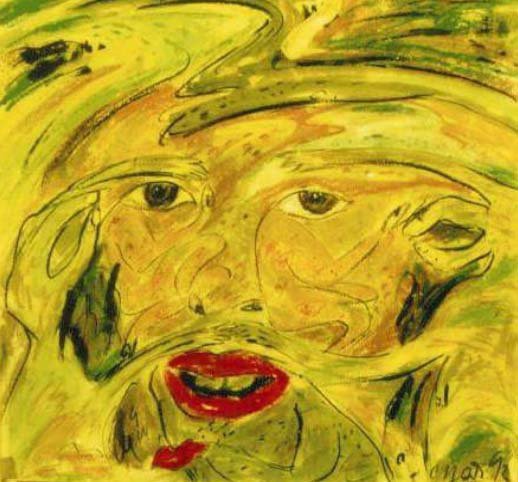
This approach was developed by Effendi Sukuraga through a 39-year journey in art, education, and culture. Its roots can be traced back to the painting “Langkah 1” (1987), the development of creative activities for children through Sanggar Emas Berwarna, and the emergence of Wayang Sukuraga in 1993. The idea subsequently expanded through formal education, academic forums, research, and cross-cultural educational activities.
In 2026, these accumulated experiences and practices were further articulated into a systematic educational approach known as the Sukuraga Education Method (SEM).
THE EARLY TRACES OF AN IDEA
1987–1997
Before the Sukuraga Education Method was recognized as an educational approach, its core idea grew through a long journey in art, culture, and the exploration of humanity.
This historical journey can be traced through artistic works, exhibition documentations, media archives, and primary documents preserved to this day.
The year 1987 marked a pivotal starting point, when concepts of humanity, the body, and movement were first translated into art. From there, the idea expanded into puppetry, international exhibition spaces, and national television media.
The following archives serve as documentation of the evolving journey that ultimately led to the development of the Sukuraga Education Method (SEM).

1992 -BUILDING AN EDUCATIONAL PRACTICE
In 1992, Effendi Sukuraga began building an independent art-education practice through Sanggar Emas Berwarna in Sukabumi. The studio became a space where children could develop creativity through art, while learning through experience, making, and self-expression.
Its existence was formally documented through an official decree issued by the Sukabumi City Education Office in 1992. This marked an important early stage in Effendi’s long-term journey of connecting art with education.
1993 — THE BIRTH OF WAYANG SUKURAGA
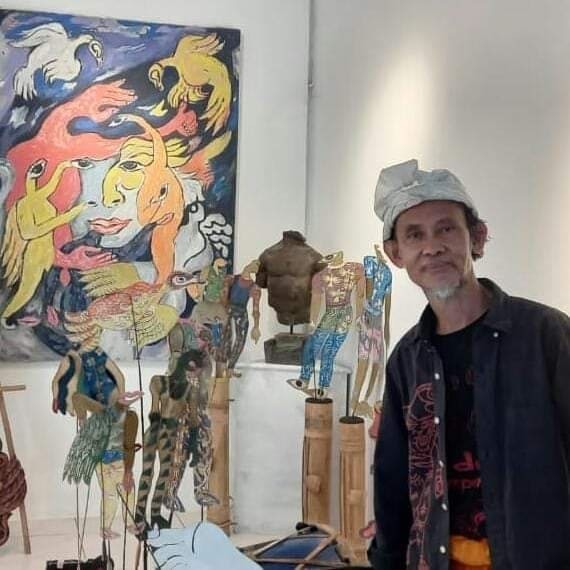
In 1993, the exploration of the human body began to take a new form. Effendi Sukuraga created Wayang Sukuraga, a distinctive puppet art in which parts of the human body become characters.
Rather than depicting characters from traditional epic narratives, Wayang Sukuraga uses the human body itself as a language for exploring self-awareness, responsibility, and human character.
This marked an important transition—from exploring the idea through visual art to creating a cultural and educational language that could be experienced, performed, and taught.
Wayang Sukuraga — 1993
Early visual form of Sukuraga, where parts of the human body become characters.

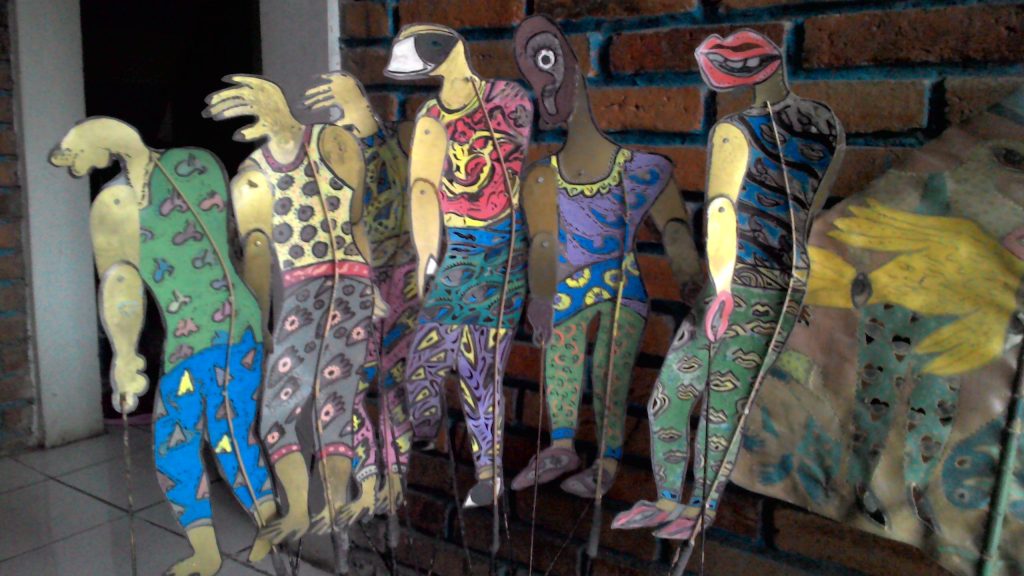
The human body becomes the character.
1995 — INTERNATIONAL ARCHIVE
The journey of Sukuraga did not remain within the local art scene. In 1995, the exploration of the human body as a subject of artistic expression reached an international setting through an exhibition at Institut Teknologi Malaysia.
This early international presentation documents an important stage in the development of Effendi Sukuraga’s ideas—before Sukuraga Education Method (SEM) was formulated as an educational method, the concept was already being explored and presented through art and cultural exchange.
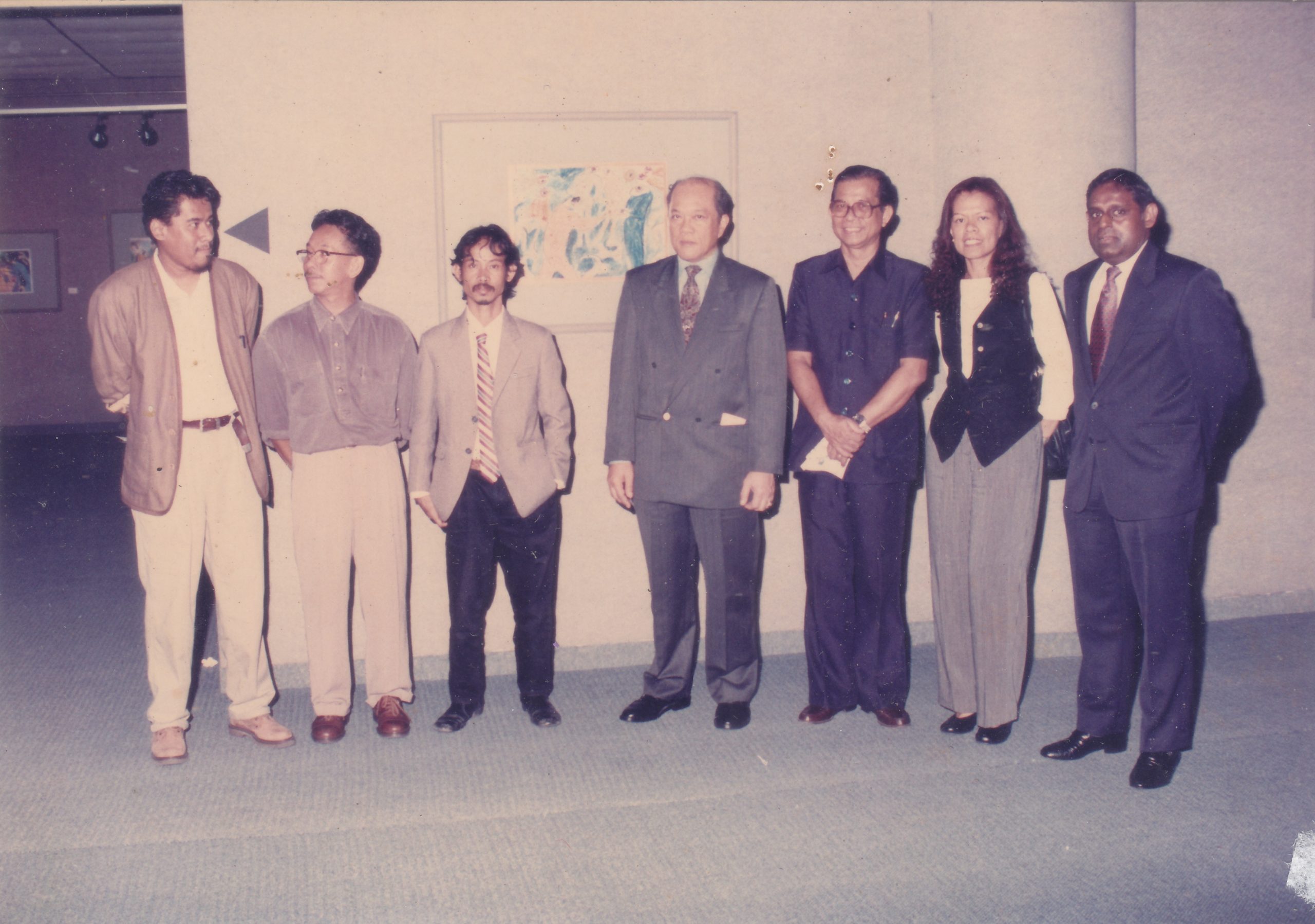
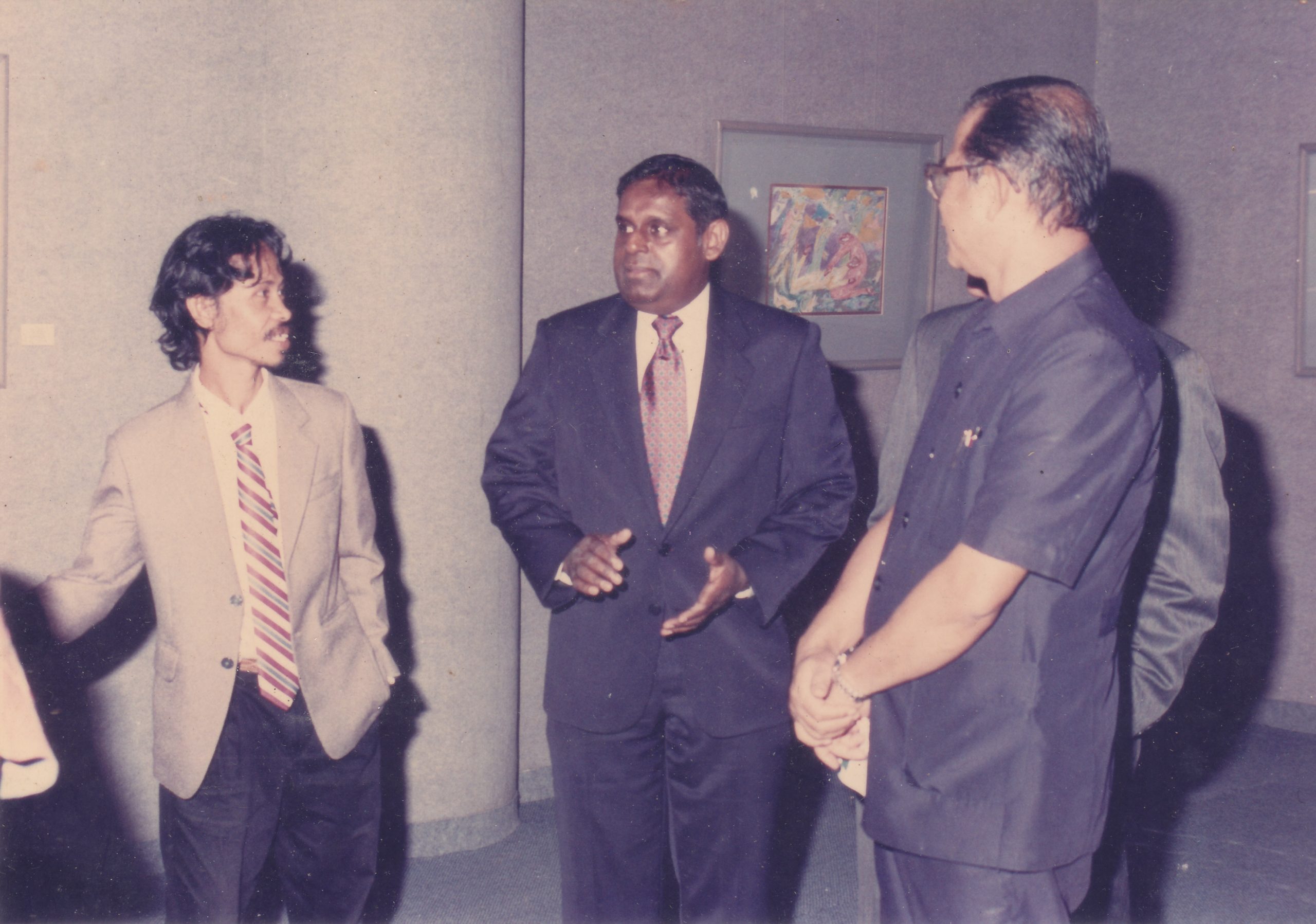
1995 — Institut Teknologi Malaysia (ITM)
With the Dean of the Faculty of Art and Design, the Director of the KSSR Gallery, the Indonesian Ambassador to Malaysia and staff.
NATIONAL MEDIA ARCHIVE
1997 — RCTI: Buka Mata Buka Telinga
In 1997, Wayang Sukuraga reached a wider public through national television. RCTI’s program Buka Mata Buka Telinga documented Effendi Sukuraga presenting his work and the ideas behind it to a broader Indonesian audience.
This historical recording captures an early moment in the public dissemination of the Sukuraga concept—where the human body, its parts, and the idea of knowing oneself became the subject of artistic storytelling and cultural education.
HISTORICAL VIDEO ARCHIVE — 1997
Archival television footage, 1997.
FROM ART TO EDUCATION
2004 — ENTERING EDUCATIONAL PRACTICE
The journey of Sukuraga gradually moved from the realm of art into education. Ideas that had previously been expressed through painting, puppetry, exhibitions, and storytelling began to be used as ways of learning about the self, the human body, and character development.
From 2004 onward, these experiences began to develop through more structured educational practice. Wayang Sukuraga was no longer only regarded as an artistic creation, but also as a learning medium connecting art, culture, and character education.
Through these experiences, the foundation that would later evolve into Sukuraga Education Method (SEM) became increasingly developed and continues to evolve today.
2004–2017 — 13 YEARS IN FORMAL EDUCATION
In 2004, Effendi Sukuraga began his formal educational journey at SDK BPK PENABUR Sukabumi as an art teacher. His educational engagement continued for 13 years, extending across elementary, junior high, and senior high school levels until 2017.
This sustained experience brought his artistic practice into the classroom and allowed him to explore how art, Wayang Sukuraga, and the human body could become pathways for learning, self-awareness, and character development.
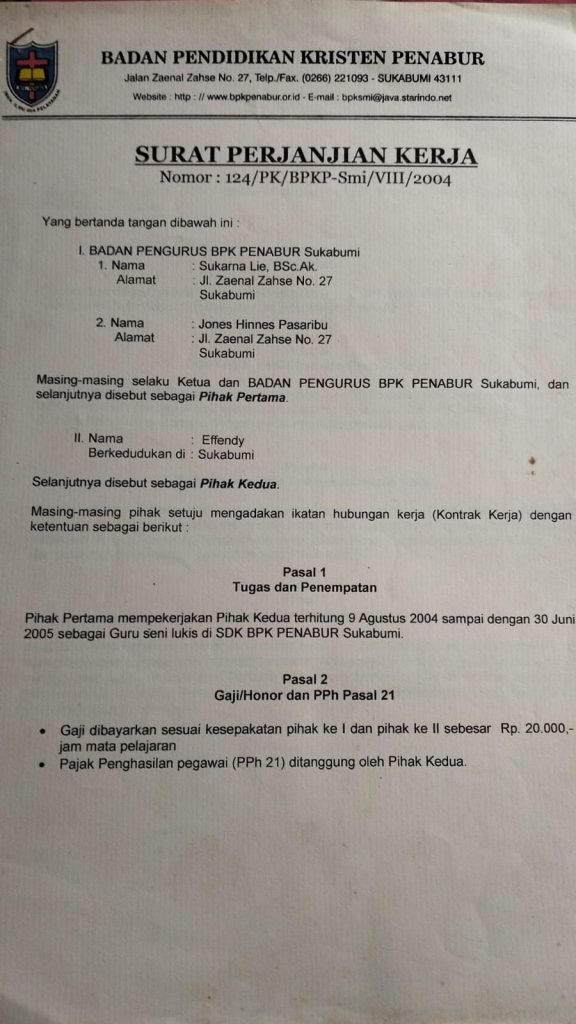
Official document confirming Effendi Sukuraga’s involvement in education at SDK BPK PENABUR Sukabumi, 2004.
EDUCATIONAL PRACTICE
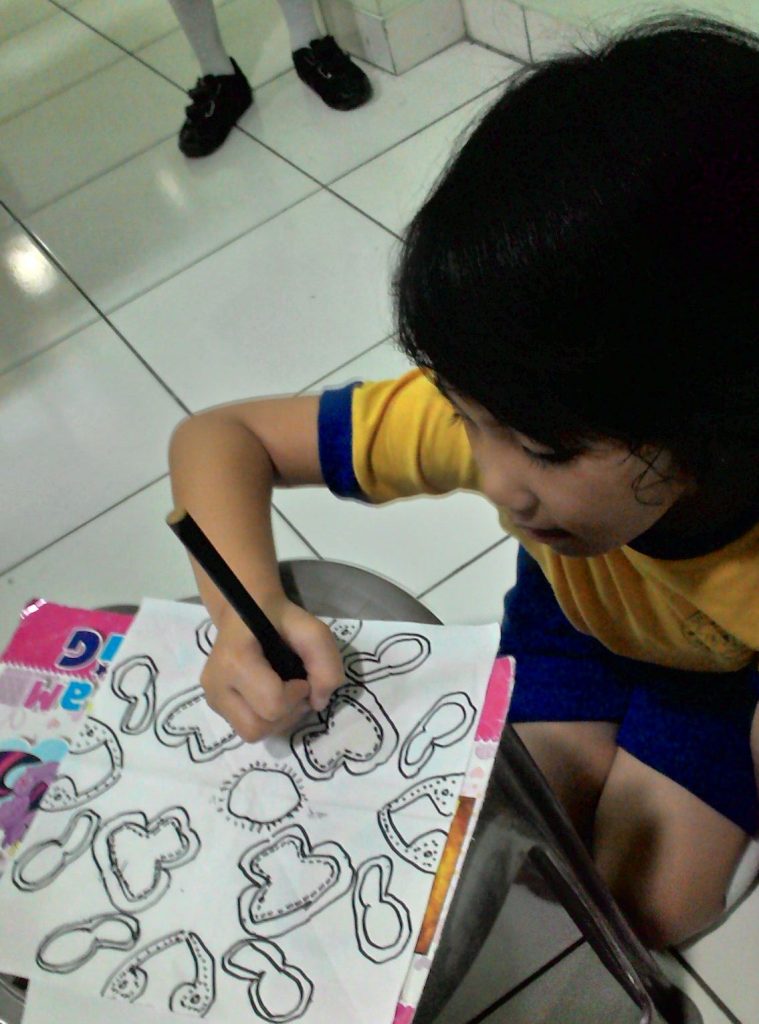
Children as Creators — From Learning to Exhibition
Children as Creators — From Learning to Exhibition
Learning becomes meaningful when children are given the opportunity to create and share their own work.
As part of the Sukuraga learning experience, Effendi Sukuraga presents special exhibitions featuring artworks created by his students. The exhibition gives children a space to see their own creations valued, displayed, and appreciated by others.
The works are not merely the final products of an art activity. They represent a learning process in which children explore, create, make decisions, and express their understanding through art.
From learning to creating, from creating to exhibiting, and from exhibiting to gaining confidence and appreciation.
Learning Anywhere — The Body as the Learning Resource
Learning does not always require sophisticated technology or expensive learning materials.
In the Sukuraga Education Method, the human body itself becomes a fundamental learning resource. Therefore, learning can take place anywhere — inside or outside the classroom, in formal or non-formal settings, with simple materials or even without learning equipment.
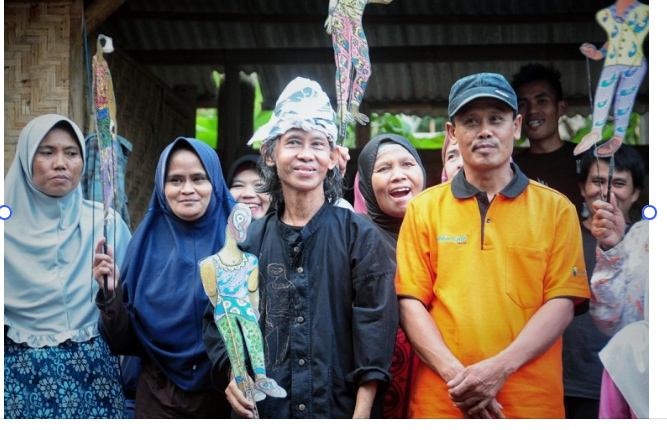
Together with youth from a village at the foot of Mount Sunda in Sukabumi Regency, Effendi Sukuraga created a simple community learning experience. The young people gathered in a community learning space, where Effendi introduced the values of self-awareness through a Wayang Sukuraga storytelling performance.
The activity demonstrates a central principle of the Sukuraga Education Method: every child has a learning resource within themselves.
The body is always present, accessible, and free. Through it, children can begin to observe, ask questions, think, reflect, and understand themselves and the world around them.
Learning can begin anywhere — because the first learning resource is already within us.
FROM THE STAGE → TO THE CLASSROOM → TO THE COMMUNITY