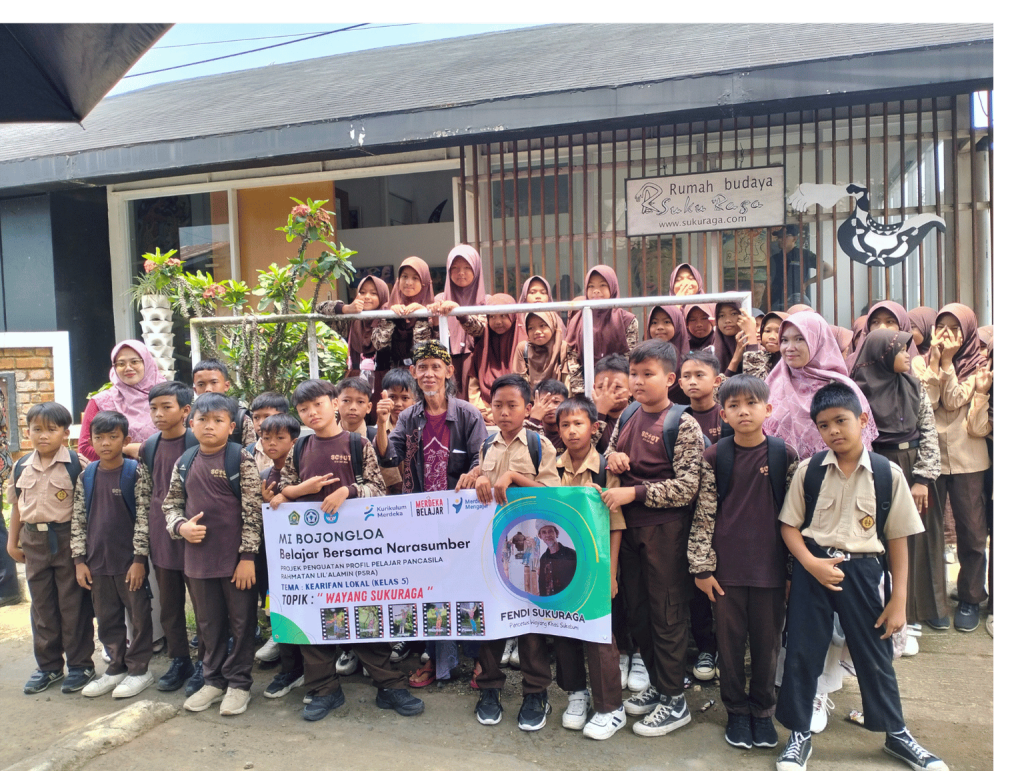
A Living Journey of Learning, Creativity and Cultural Practice
For more than three decades, Effendi Sukuraga has continuously explored how the human body can become a source of learning. The evidence presented here reflects not a single project, but an evolving journey—through generations, disciplines, educational settings, creative media, and cultural contexts.
From documented milestones and academic engagement to workshops, school visits, creative activities, and children’s direct experiences, these materials show how the Sukuraga Education Method (SEM) continues to live and evolve in practice.
Some moments are formally documented; others live quietly in lassrooms, workshops, communities, and in the experiences of those who have carried the idea forward. Together, they reveal a pedagogy that continues to evolve while remaining rooted in one fundamental idea:
Knowing the Self Through the Human Body.
ACADEMIC & INTERNATIONAL VOICES
PROF. DR. MARTIN VALCKE / Ghent University, Belgium
Dr. Iqra Iqbal — Government College University Faisalabad, Pakistan
A philosophical reading of Wayang Sukuraga by Rocky Gerung
After watching a Wayang Sukuraga performance during his public lecture Akal Sehat at Universitas Muhammadiyah Sukabumi, philosopher and academic Rocky Gerung offered a spontaneous interpretation of its satire and symbolism.
He connected the relationship between the mouth, the mind, and the heart (qolbu) with the idea of human self-control and moral awareness.
Video evidence: 09:15–10:20
“When the mouth fails to be guided by reason, it means that reason has failed to learn from the Qolbu.” Rocky Gerung
VIDEO EVIDENCE — LEARNING IN ACTION
COLOURING THE SELF — Learning Through Body and Batik
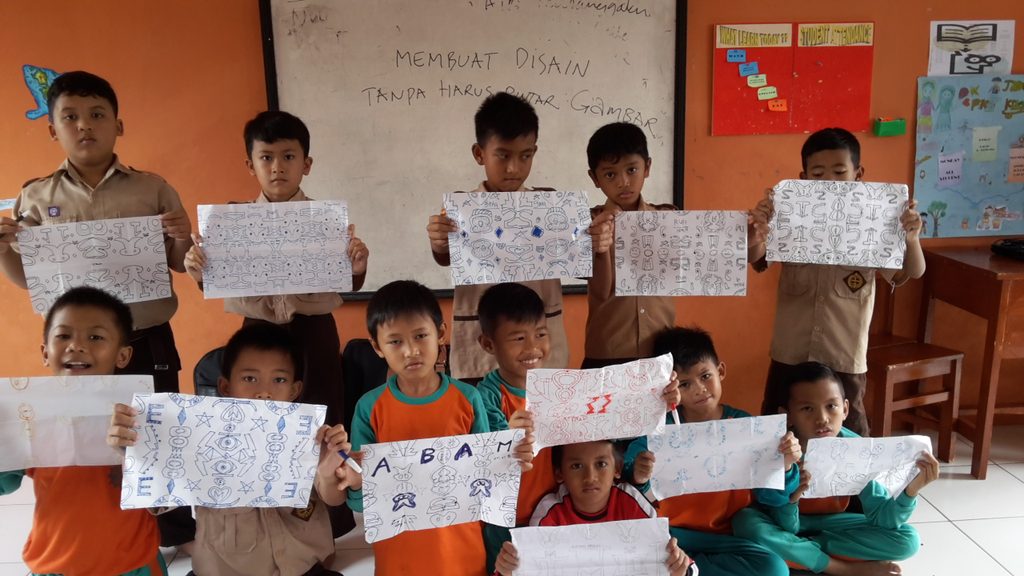
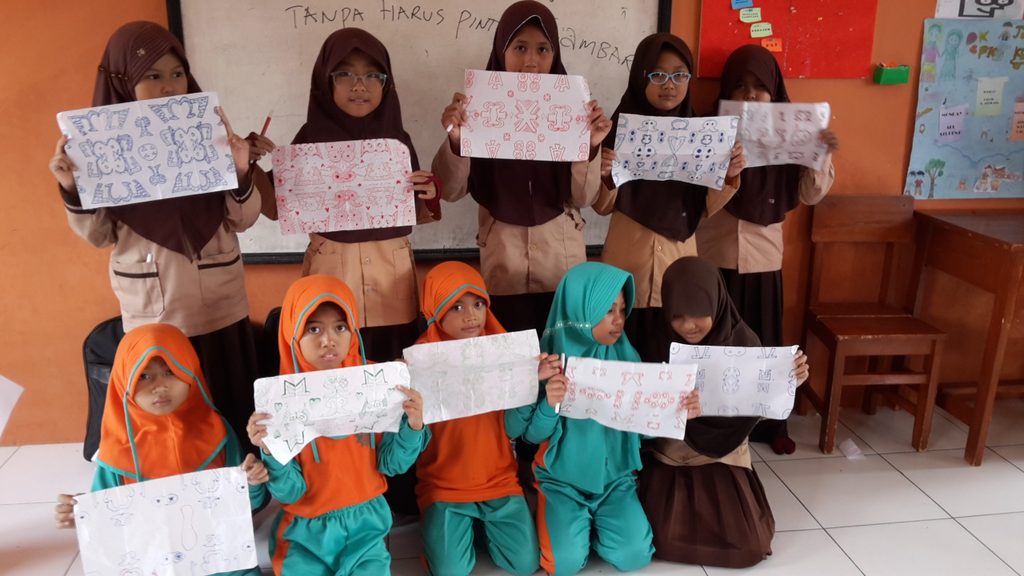
In early childhood education, colouring is a familiar art activity. Through Sukuraga Education Method, however, colouring becomes an opportunity for children to know themselves through their own body parts.
After watching a Wayang Sukuraga performance, the children are invited to colour Sukuraga characters representing body parts such as the mouth, eyes, ears, and hands.
The experience is different from ordinary colouring on paper. The children colour on hand-stamped batik cloth prepared with wax (malam) as a resist, using batik dyes such as Remasol, applied by colet or painting techniques.
Before colouring, the children are encouraged to recognize themselves: What does my mouth like? What does it not like? What do my ears like to hear? What do they not like to hear?
Thus, colouring becomes more than an artistic activity. The body becomes the learning resource, art becomes the medium, and self-awareness becomes the learning experience.
This is how Fendi Sukuraga applies the Sukuraga Education Method:
From the Body, Culture Grows.
KUDU LEUMPANG — Learning Through Process
Kudu Leumpang means “must walk.” In Sukuraga Education Method, the human foot becomes a symbol of the effort and process required to achieve a goal.
In this activity, elementary school children do not simply receive a finished learning material. They draw the foot themselves, colour it, cut it out, and attach it to a stick to create their own Kudu Leumpang figure.
Each stage becomes part of the learning experience. Children learn that when they have a desire or goal, they cannot remain only in imagination—they need to take steps and go through a process.
After completing their work, the children gather and sing the “Kudu Leumpang” song together. The joyful activity becomes a moment of gratitude and celebration after completing the process.
Draw → Colour → Cut → Create → Move → Sing → Reflect
This is the Sukuraga Education Method in action: learning through doing, experiencing the process, and finding meaning through the body.
VALIDATION IN PRACTICE
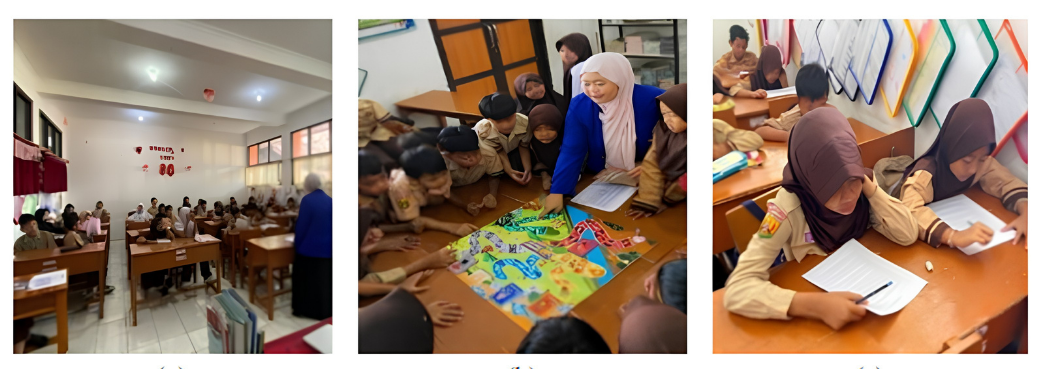
Effendi Sukuraga and Khalista review and validate the Sukuraga Inboard Game as part of the development and refinement of learning materials for Sukuraga Education Method (SEM).
The process demonstrates how Sukuraga learning materials are examined through direct practice with participants before being further developed and used in learning activities.
SELF-AWARENESS & MOVEMENT IN PRACTICE
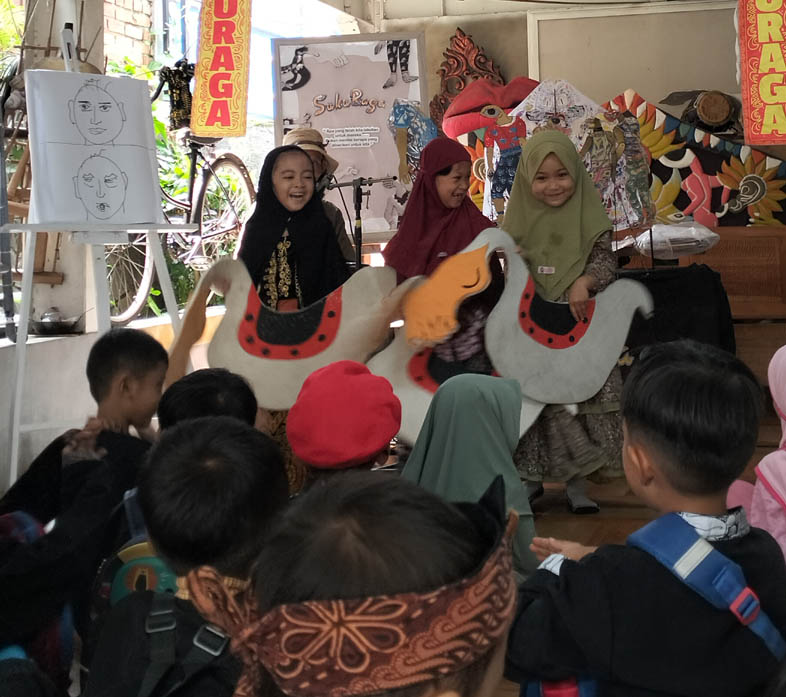
what you hope to achieve.
In this Sukuraga learning activity, children are invited to discover two connected lessons through their own bodies. First, they explore self-awareness by drawing a simple circle into a face and reflecting on expressions of honesty and dishonesty—learning to recognize what happens within themselves. Second, through Kudu Leumpang, the human foot becomes a simple metaphor for action: when we have a wish, hope, or goal, we cannot remain only in our imagination. We must take a step, move forward, and make an effort to reach it.
Through drawing, movement, and play, children experience that knowing oneself and pursuing a goal are both processes that require awareness, practice, and continuous effort.
CREATIVE PRACTICE
ART AS A LEARNING TOOL — Learning Through Gallery Objects
In Sukuraga Education Method, artworks are not merely displayed as objects of appreciation. They become learning tools that invite students to observe, question, think, and reflect on themselves.
During a discussion with high school students at Sukuraga Gallery, a student asked why one of the sculptures displayed in the gallery had no head, hands, or feet.
The question became an entry point for a discussion about the meaning of being useful to oneself and to others. The sculpture was connected to the idea that the head represents the ability to think, while the eyes, ears, mouth, and brain enable humans to see, listen, speak, and reason.
The discussion led students to reflect: What happens when a person is controlled by desire and does not use these abilities to do good for themselves and others?
In this way, a sculpture becomes more than an artwork. It becomes a visual stimulus for self-awareness, dialogue, moral reflection, and character formation.
In art terminology, a sculpture representing an incomplete human body such as this is commonly referred to as a torso.
COMMUNITY & EDUCATIONAL ACTIVITIES
Wayang Sukuraga & Anak anak GWK
TEACHER TRAINING — From Workshop to Classroom
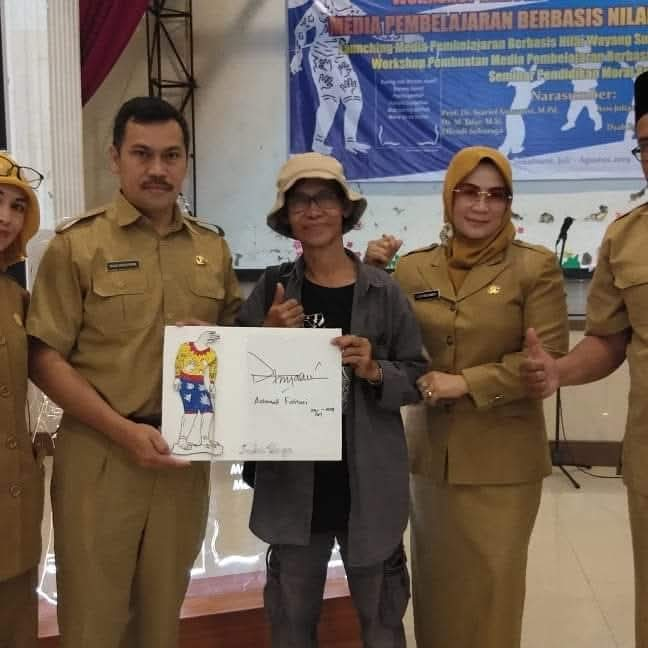
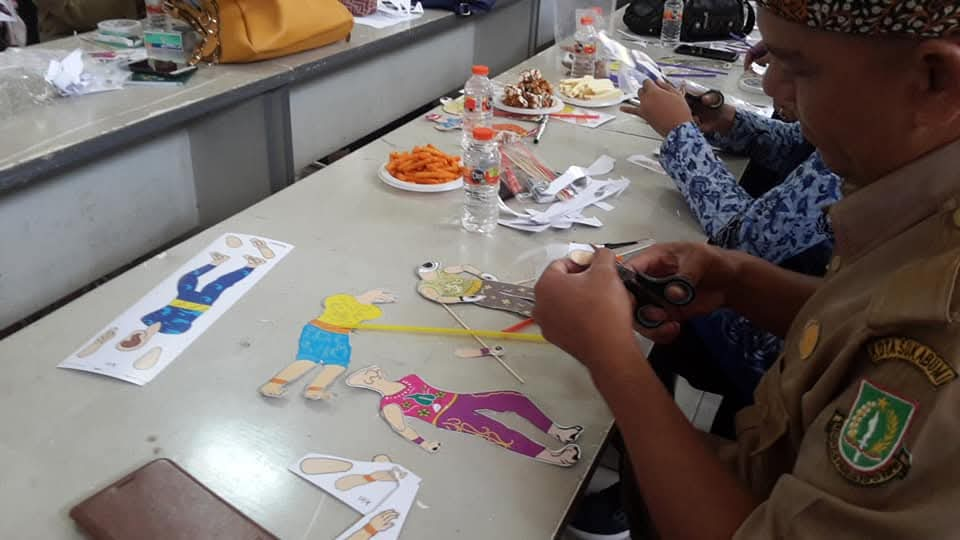
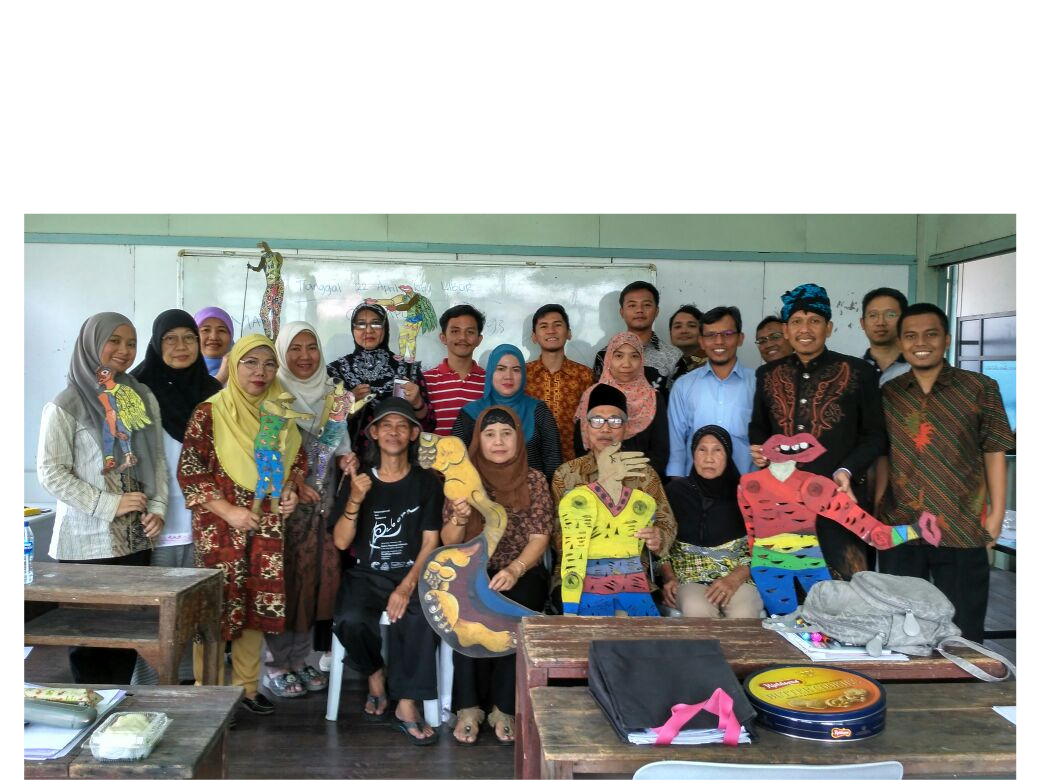
Since 2018, Yayasan Sukuraga, together with academics, researchers of Wayang Sukuraga, and the Sukabumi City Government, has conducted Focus Group Discussions (FGDs) and workshops on Wayang Sukuraga as an educational learning medium for elementary school teachers across Sukabumi City.
During the workshops, teachers directly learned to cut, assemble, and create Wayang Sukuraga learning materials. These activities prepared teachers with practical materials and experience to bring the learning approach into their own classrooms and share it with their students.
REACHING INTERNATIONAL AUDIENCES, INFORMALLY
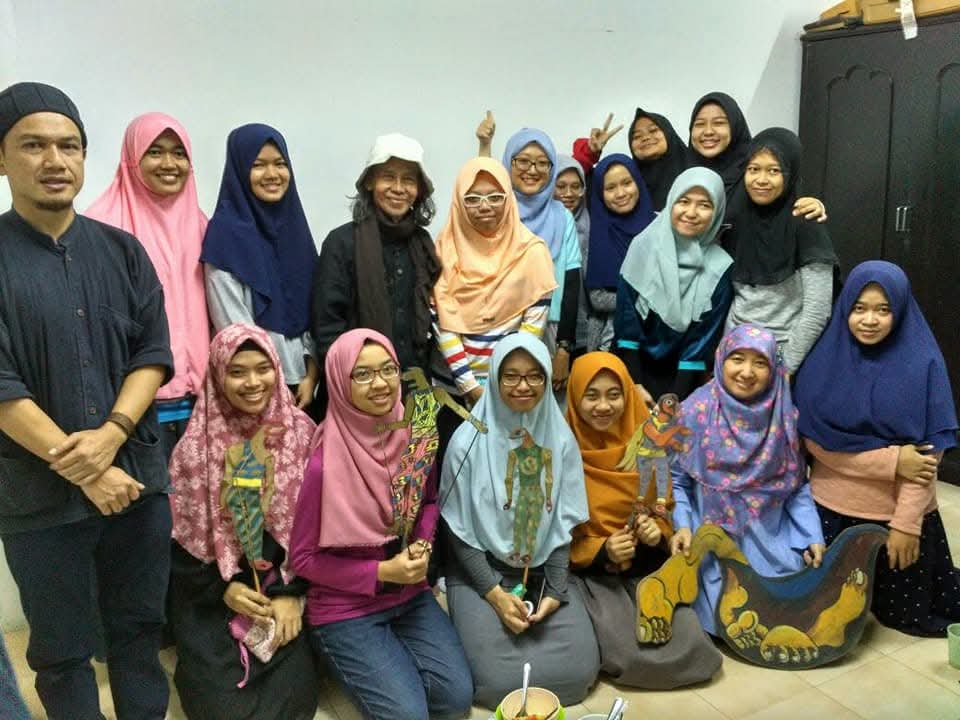
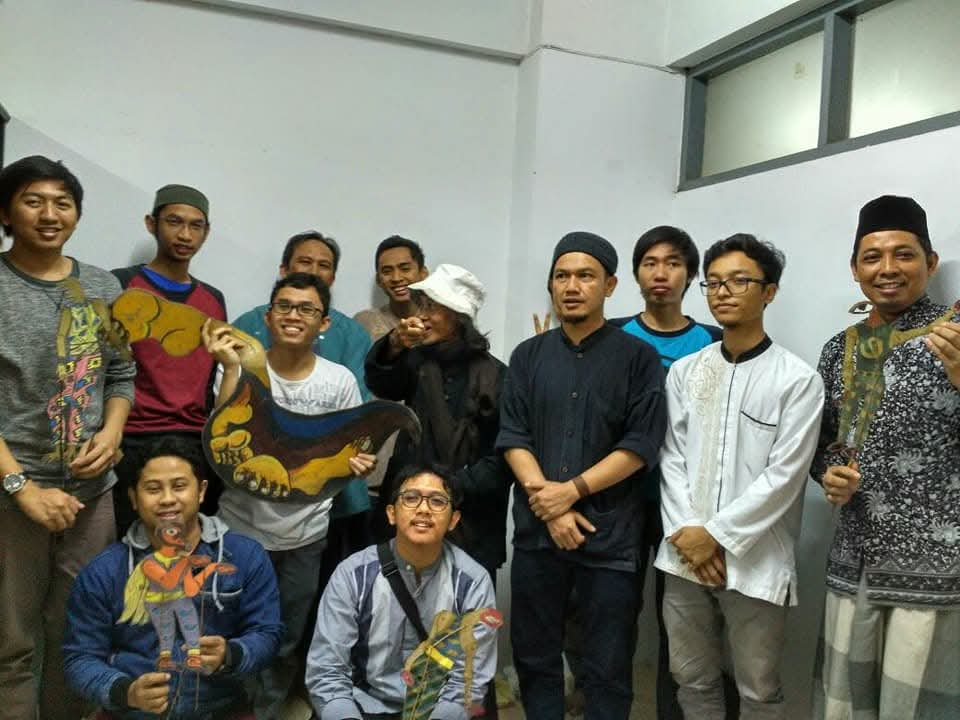
Beyond formal exhibitions and academic settings, Effendi Sukuraga has also introduced the Sukuraga method through informal community engagement abroad — including with Kampung Jawa Thailand, a community of Javanese descent in Thailand, as well as with associations of Indonesian students and scholars based in Bangkok. These encounters reflect how the Sukuraga method travels not only through institutions, but through direct, grassroots cultural connection.
DIGITAL LEARNING EVIDENCE
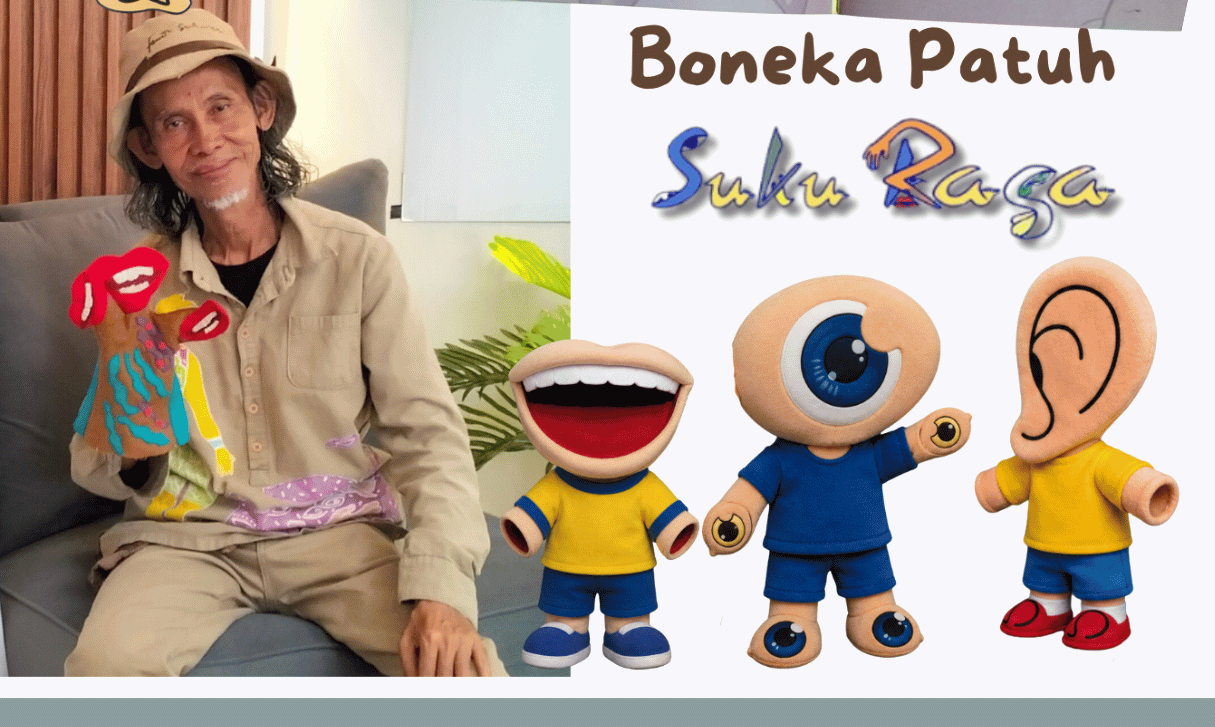
2013 – Present, “BONEKA PATUH SUKURAGA “
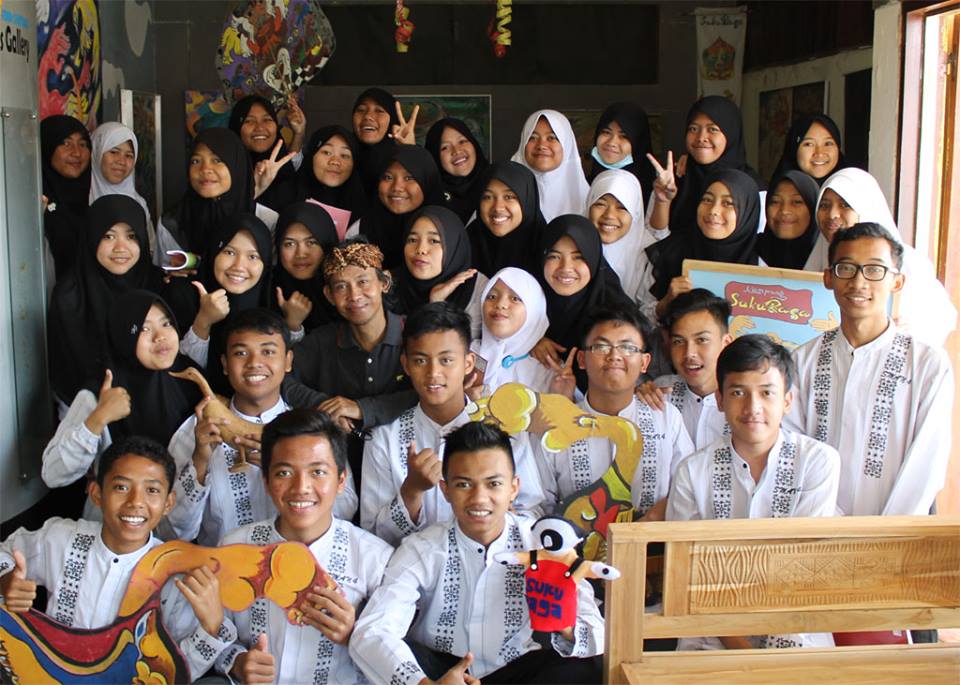
Students of SMA Negeri 4 Kota Sukabumi at Effendi Sukuraga’s home in 2013, holding the “Kudu Leumpang” teaching aid and an early Boneka Patuh puppet — the same collaboration that first gave the fabric hand-puppet its form.
RECENT INNOVATION & INSTITUTIONAL RECOGNITION
The Boneka Patuh Sukuraga Method is more than an educational toy. It is a manifesto for the future of education, rooted in Nusantara’s local wisdom. While the outside world offers visual stimulation that alienates children from themselves, Boneka Patuh instead draws them back inward — to know themselves, master their own bodies, and step confidently toward becoming whole human beings.
BONEKA PATUH SUKURAGA — MINISTRY OF CULTURE, DANA INDONESIA RAYA 2026
In 2013, Effendi Sukuraga first created the fabric hand-puppet version of Wayang Sukuraga together with students of SMA Negeri 4 Kota Sukabumi.DPD RI AWARDS 2026
In 2026, Effendi Sukuraga was named among the Top 50 participants of DPD RI Awards 2026 (Regional Representative Council of the Republic of Indonesia), in the Education category / Innovation track, for the Sukuraga Character Method. The selection process is ongoing, with Effendi currently proceeding to the next evaluation stage.INSTITUTIONAL RECOGNITION
This recognition, alongside the Ministry of Culture’s approval of Boneka Patuh Sukuraga under Program Dana Indonesia Raya, reflects a growing acknowledgment — from local cultural roots to national government institutions — that body-based character education through Wayang Sukuraga offers a genuine contribution to Indonesia’s education landscape.
MUSIC AS SELF-DISCOVERY
DAMINATILA — Learning to Know Ourselves Through Music
In the Sukuraga Education Method, music becomes a medium for children to explore the meaning of life and know themselves.
In this activity, elementary school students learn to play the traditional Sundanese angklung while singing “Daminatila”, a creative song developed by Effendi Sukuraga from the five-note Sundanese musical scale.
Each syllable becomes an invitation to reflect on human existence:
DA — Where do human beings come from?
MI — Whose is this world and everything in it?
NA — One day, we will all return to our origin.
TI — This world is not eternal; life is temporary.
LA — Therefore, carry out the commands of the Almighty.
Through singing and playing angklung together, children experience music not only as artistic expression, but also as a pathway to self-awareness, reflection, values, and cultural appreciation.
The activity connects traditional music, creativity, philosophy, character education, and self-discovery in one learning experience.
DOCUMENTED MILESTONES
From an Artistic Idea to a Living Educational Practice
The development of Wayang Sukuraga and its educational approach has been documented through key milestones, institutional recognition, educational activities, and cultural development over several decades.
These records provide a chronological view of how an artistic exploration grew into an evolving educational and cultural practice—continuously developed through schools, communities, creative programs, research, and public engagement.
“LANGKAH ” 1987 . Painting oil
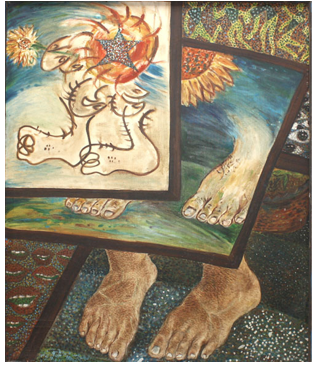
Langkah is an early painting in which Effendi Sukuraga began a personal visual dialogue with parts of the human body—particularly the feet, mouth, and eyes.
This exploration became an important starting point for the idea that later developed into Wayang Sukuraga, in which human body parts are represented as characters and become a medium for exploring self-awareness and character.
An artistic exploration became the beginning of an educational philosophy: knowing the self through the human body.
1992 — SANGGAR EMAS BERWARNA: FROM ART TO LEARNING
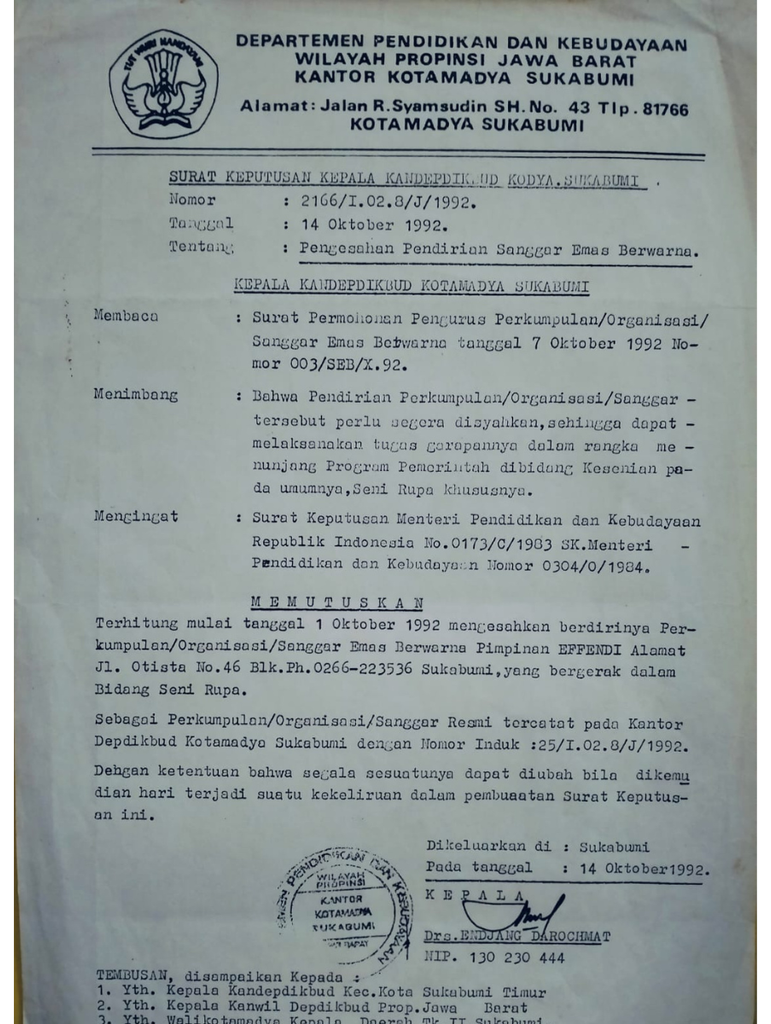
In 1992, Effendi Sukuraga realized that his work was not only about creating paintings as works of art, but also about developing art as a learning medium for children. Sanggar Emas Berwarna was therefore established as a space for creating and learning through art, with formal recognition through a Decree of the Head of the Education and Culture Office of Sukabumi City.
“PERAN ” Kepala Suku . 1993 .
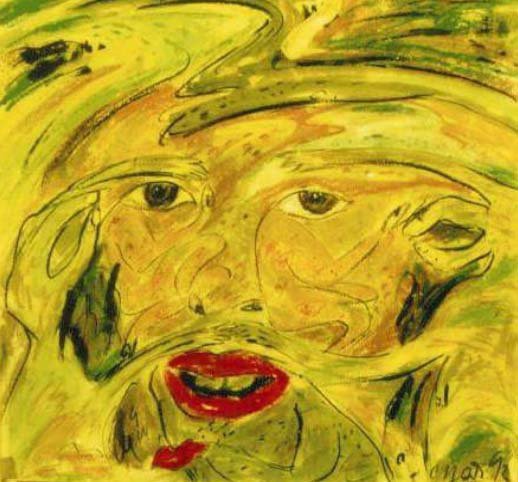
“I looked at myself in the mirror. From the eyes and mouth I saw, an idea began to grow: each part of the human body could have its own role and character.”
Peran – Kepala Suku is a self-portrait by Effendi Sukuraga, created through the experience of looking at and observing himself in a mirror. In this process, the eyes and mouth began to appear not merely as parts of the face, but as visual forms that would later develop into characters in Wayang Sukuraga.
Although the work remains, as a whole, a self-portrait of the artist, it already reveals an emerging idea of seeing parts of the human body as forms with their own roles and character.
This work represents an important stage in the visual exploration that led toward Wayang Sukuraga—a journey from knowing oneself through the mirror, observing the human body, and eventually transforming body parts into sources of artistic and educational ideas.
1993 — BODY PARTS BECOME CHARACTERS

“Different roles, one body, one purpose.”
In 1993, parts of the human body began to be represented as characters in Wayang Sukuraga. In this work, different body parts are portrayed travelling together, carried forward by two feet as their vehicle — Kudu Leumpang.
The work presents the human body as a unified whole. Each body part has a different form and role, yet all can move together toward a common goal.
Behind this journey is an idea of togetherness, cooperation, and harmony: when each part performs its role and works together, the journey can move toward a shared purpose.
This work marks an important stage in the development of Wayang Sukuraga, when body parts were no longer simply observed as parts of the human body, but began to be brought to life as characters with their own roles and meanings.
1995 — PERAN: DIALOGUE BEYOND BORDERS
30 Paintings as a Learning Medium
In 1995, 30 paintings from the “PERAN” series by Effendi Sukuraga were exhibited at the Gallery of Painting and Design Studies, Institut Teknologi MARA (ITM), Malaysia.
The exhibition was organized through a collaboration between Sanggar Emas Berwarna and the School of Art and Design, ITM Malaysia, with support from the Indonesian Embassy (KBRI) in Kuala Lumpur.
The exhibition became more than an artistic event. Through discussions with lecturers, artists, and members of the academic community in Malaysia, Effendi’s idea of painting as a learning medium became increasingly developed and strengthened.
The works also received direct recognition from the local art community. Several ITM lecturers and artists acquired paintings from the exhibition, while Gallery Shah Alam Malaysia purchased two works.
After returning to Indonesia, this exploration continued into a more tangible form. The idea of human body parts as characters subsequently developed into Wayang Kulit Sukuraga.
This became an important point in the journey from painting, through cross-border dialogue, toward educational media and performing arts.
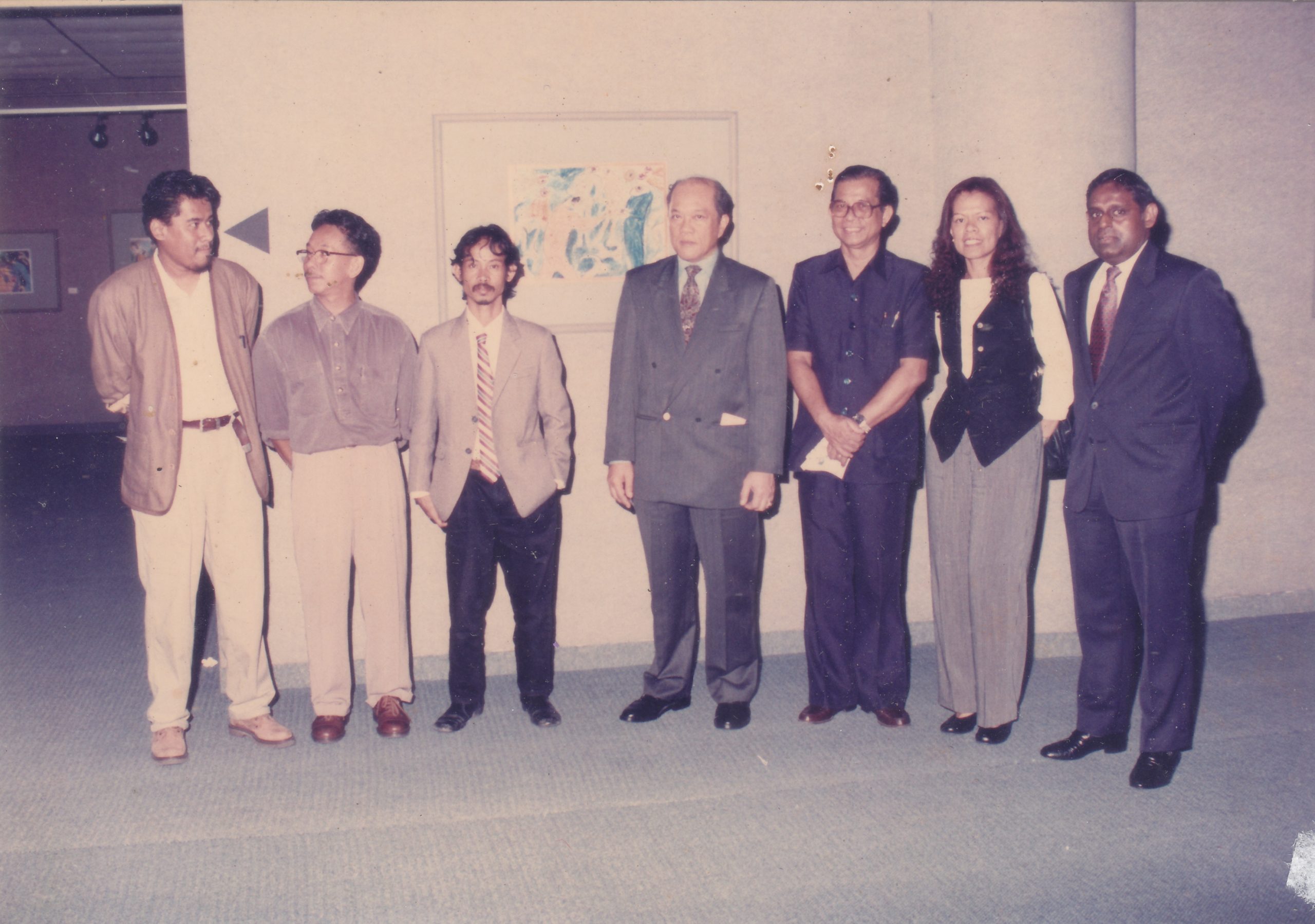
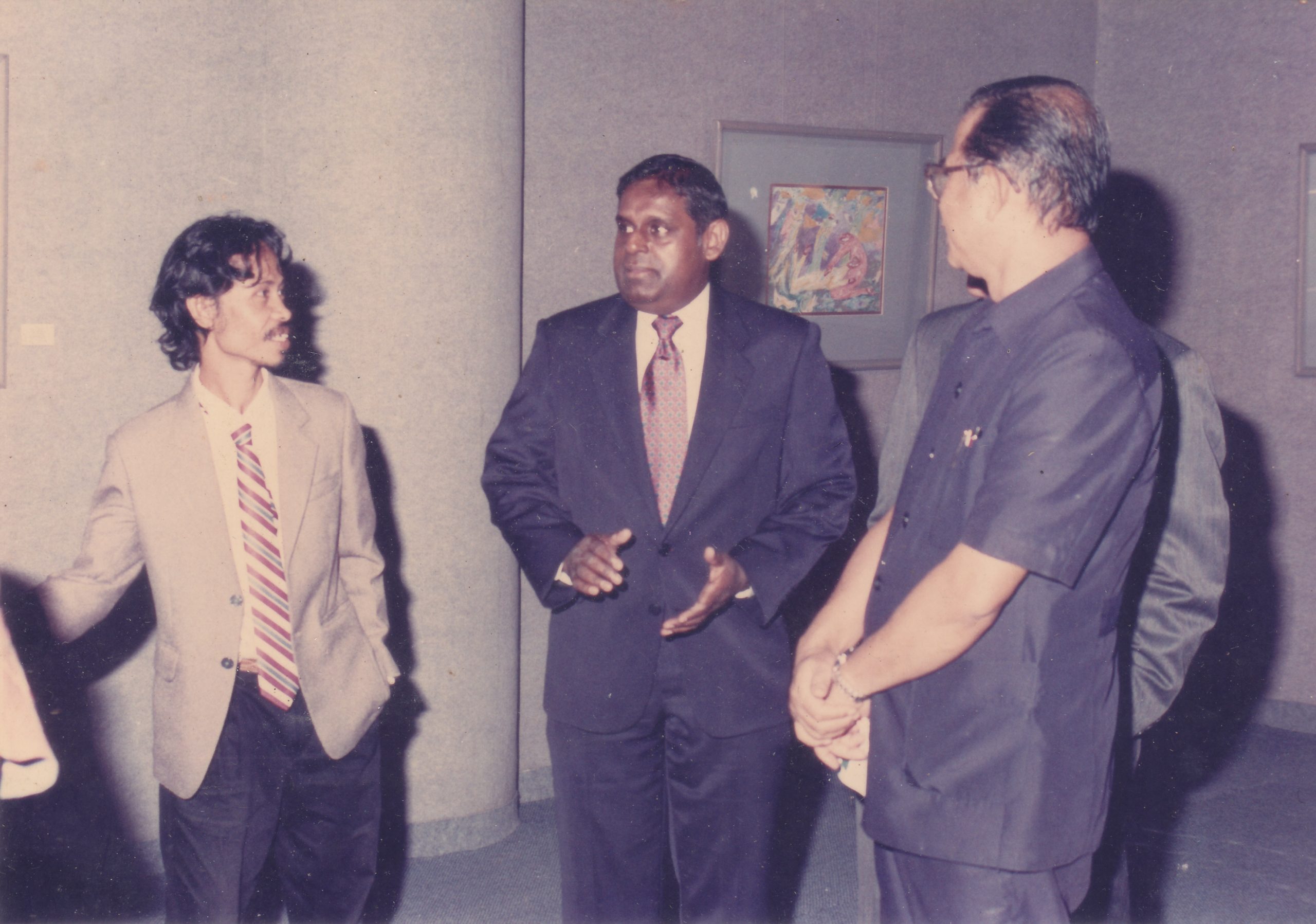
1995 — Institut Teknologi Malaysia (ITM)
With the Dean of the Faculty of Art and Design, the Director of the KSSR Gallery, the Indonesian Ambassador to Malaysia and staff.
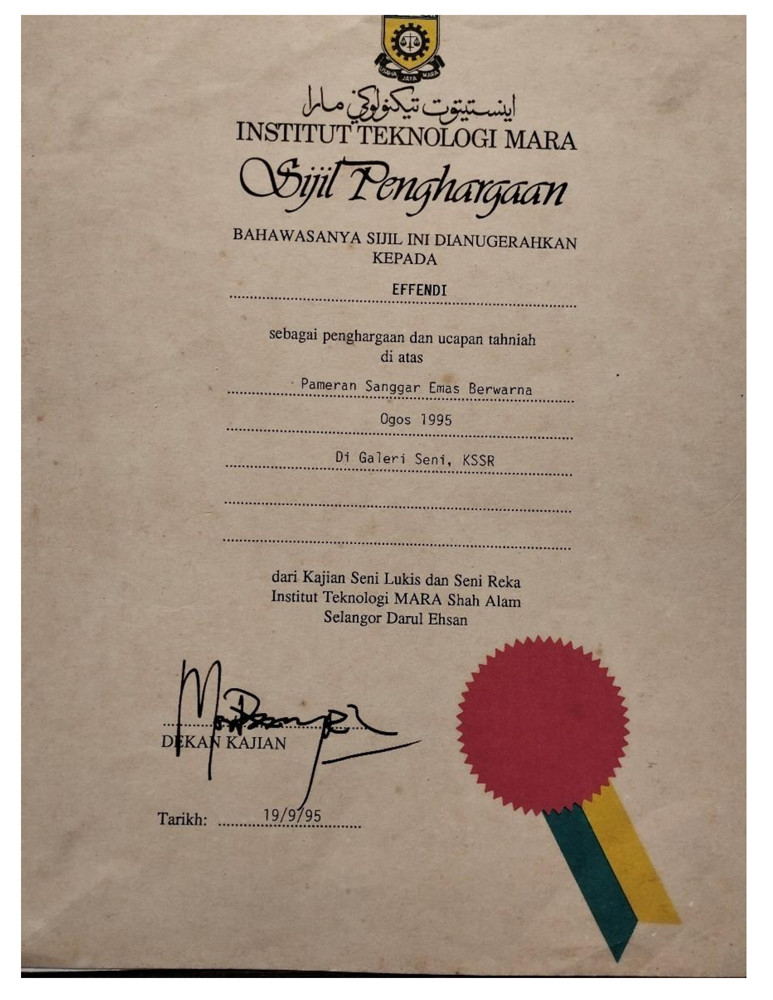
Certificate of Appreciation — Institut Teknologi MARA (ITM),
1995Awarded to Effendi in recognition of the Sanggar Emas Berwarna exhibition,
Kajian Seni Lukis dan Seni Reka, ITM Shah Alam, Selangor.
1995 — Bringing the Sukuraga Idea into an International Context
In 1995, through the legally established Sanggar Emas Berwarna, Effendi Sukuraga began bringing his idea of art as a learning medium into an international context. The exhibition of his Peran works at Institut Teknologi MARA (ITM), Malaysia, provided an opportunity to introduce this idea to an academic environment and a cross-cultural audience.
The exhibition was visited by diverse audiences, including international guests from countries such as Korea and Thailand, who were present through the university’s international community. Encounters and discussions with lecturers, artists, and visitors further strengthened Effendi’s conviction that art and the human body could be developed not only as visual works, but also as a medium for learning and knowing oneself.
This international experience became an important point in the further development of the Sukuraga idea, leading toward Wayang Kulit Sukuraga after Effendi returned to Indonesia.
FROM LEARNING TO IMPACT
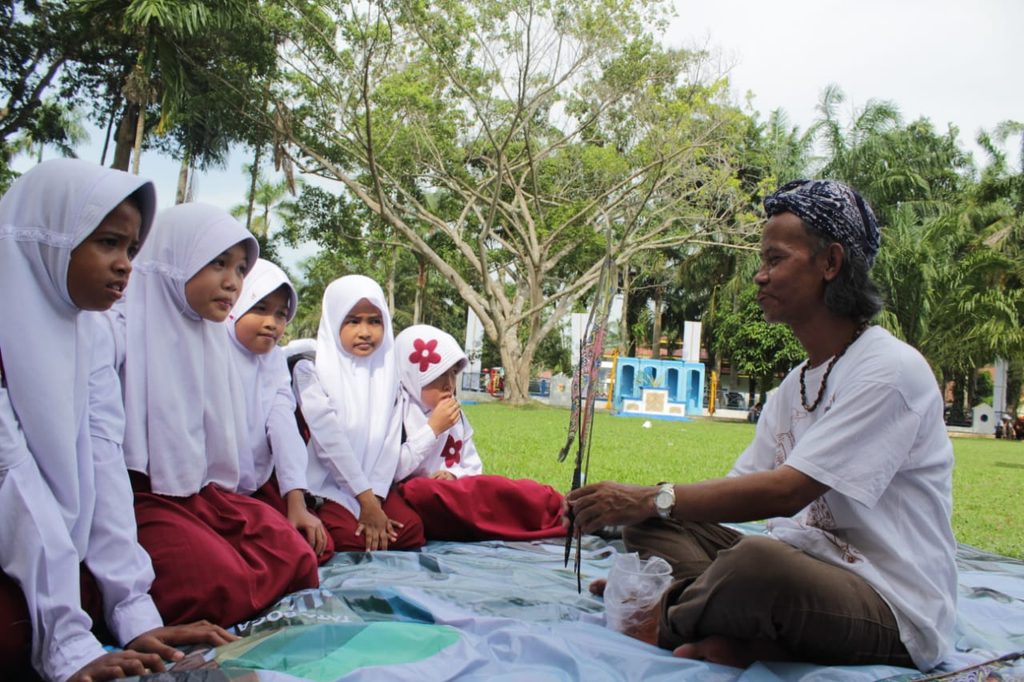
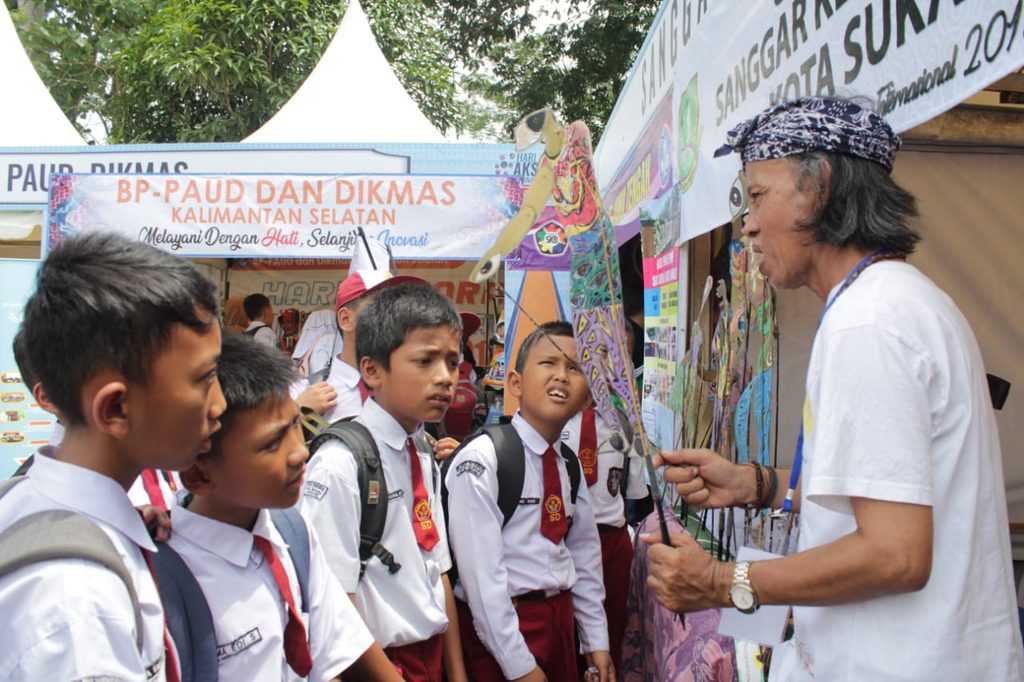
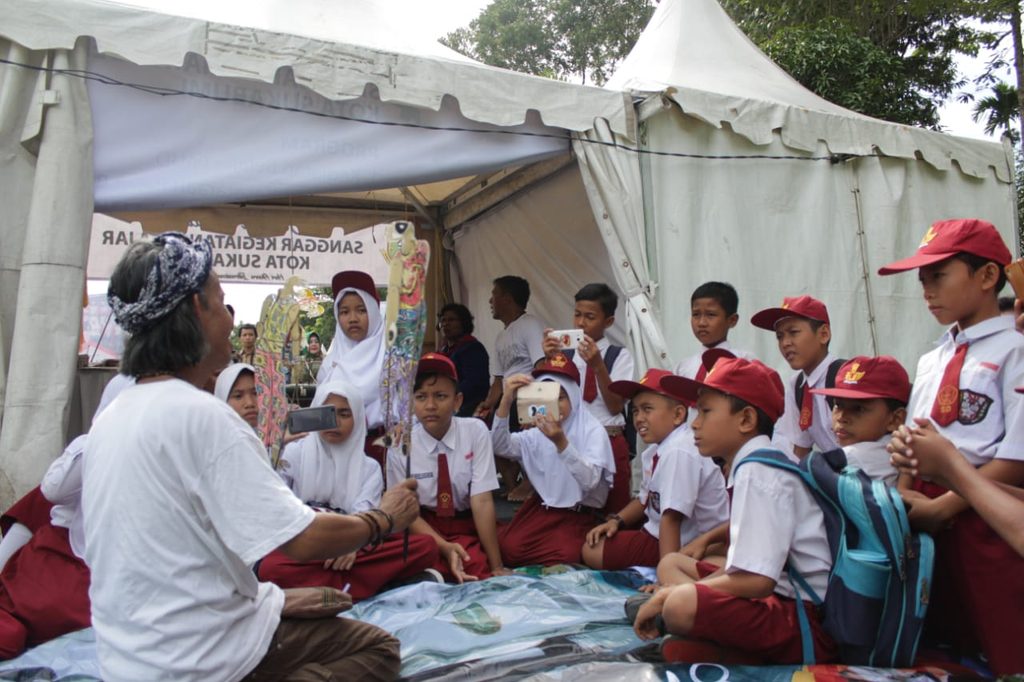
From a single painting in 1987 to an educational method developed through decades of practice, one idea has remained constant: the human body is not merely something we possess — it is where learning, character, and self-awareness begin.
The Sukuraga Education Method was born from the concern of a painter, Effendi “Fendi” Sukuraga, for the world of education. Without formal university education, he developed his ideas through experience, observation, practice, and reading — transforming the human body, something present in every person, into an accessible source of learning.
What began as an artistic exploration gradually grew into an educational approach practiced with children, teachers, schools, communities, and academic partners.
This is the journey of Sukuraga Education Method — and it continues, one child, one classroom, one community, and one story at a time.