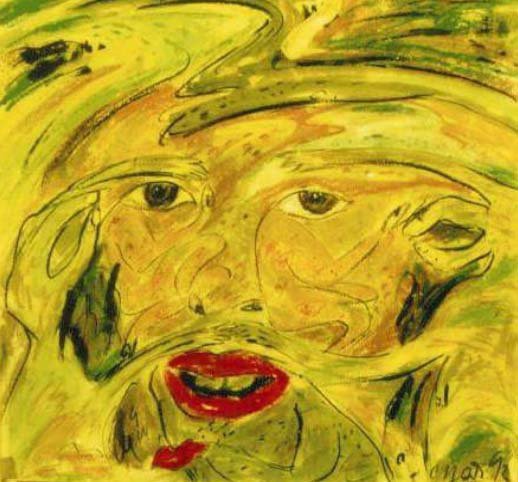
Knowing Yourself
Before we learn to understand the world, we must first learn to understand ourselves.
This simple belief has become the foundation of Effendi Sukuraga’s artistic journey and the philosophy that has guided his work for more than three decades.
For Effendi, the human body is far more than a biological form.
It is the first teacher of life.
Every day, our eyes choose what to see.
Our ears choose what to hear.
Our mouth chooses what to say.
Our hands choose what to create.
Our feet choose where to go.
Every decision begins with the body.
Yet people often pay more attention to the world around them than to the body that makes every choice possible.
Effendi believes that every part of the body carries both a gift and a responsibility.
The eyes are entrusted with seeing wisely.
The ears with listening carefully.
The mouth with speaking truthfully.
The hands with doing good.
The feet with walking the right path.
When each part fulfills its responsibility, harmony begins within ourselves before it appears in society.
For Effendi, morality does not begin with rules.
It begins with awareness.
Knowing yourself is not about recognizing your name, profession, or social status.
It is about becoming aware of how we use every part of our body in our daily lives.
This awareness nurtures gratitude.
Gratitude leads to responsibility.
Responsibility shapes character.
And character influences the future of individuals, communities, and humanity.
Throughout history, many philosophies have encouraged people to look inward.
Effendi’s contribution is unique.
He invites people to understand themselves through the language of the human body—a language that everyone possesses regardless of age, culture, nationality, or religion.
This philosophy eventually became the foundation for an original artistic creation known as Wayang Sukuraga.
Through art, the body becomes the storyteller.
And through that story, people are invited to discover themselves.